

Chimney Inspection Amelia Island FL: Coastal Fire Safety Essentials
Chimney Champions provides certified chimney inspections for Amelia Island homeowners, addressing coastal-specific hazards including salt air corrosion, moisture intrusion, and wildlife nesting. CSI-certified inspectors evaluate masonry integrity, flue conditions, and cap security to prevent carbon monoxide risks and structure failures unique to oceanfront properties.
Amelia Island’s coastal charm comes with hidden chimney challenges most homeowners don’t see until it’s too late. Salt-laden air accelerates masonry deterioration, humidity promotes creosote buildup, and seasonal wildlife turns flues into nesting grounds — all creating fire hazards and carbon monoxide risks that demand specialized inspection protocols beyond standard residential evaluations.[1]
At Chimney Champions in Northeast Florida, our third-generation certified sweeps understand what oceanfront properties require. Laura Wood, a CSI-certified chimney professional, leads a woman-owned team serving Amelia Island with inspection expertise tailored to coastal conditions that mainland properties never encounter.
Written by Laura Wood — Third-generation certified chimney sweep and owner of Chimney Champions. CSI-certified with Office Manager Jenea, serving Northeast Florida’s coastal communities with specialized fire safety expertise since establishment.
Why Do Amelia Island Chimneys Need Different Inspections?
Coastal chimneys deteriorate 2-3 times faster than inland systems due to salt air exposure, according to the Chimney Safety Institute of America.[2] Salt particles embed in masonry pores, attracting moisture that freezes and thaws, creating spalling and structural cracks. Standard inspection checklists miss these nuanced degradation patterns.
Humidity compounds the challenge. Amelia Island averages 75% relative humidity year-round, promoting rapid creosote accumulation even in infrequently used chimneys.[3] Creosote becomes tacky in humid conditions, adhering to flue liners and increasing ignition risk. Wildlife — particularly osprey, raccoons, and chimney swifts — exploit uncapped chimneys as nesting sites, blocking ventilation and creating fire hazards from combustible nesting materials.[4]
What Does a Certified Fireplace Inspection Amelia Island Include?
A Level 2 inspection evaluates all accessible chimney portions, internal flue conditions via video scanning, and coastal-specific deterioration markers. The National Fire Protection Association mandates Level 2 inspections when selling property, changing fuel types, or after weather events — criteria most Amelia Island homes meet due to storm exposure.[5]
Our certified inspectors examine:
- Masonry integrity: Spalling, efflorescence (white salt deposits), and mortar joint degradation indicating moisture penetration
- Flue liner condition: Cracks, gaps, or clay tile deterioration from thermal cycling and humidity
- Cap and crown: Rust on metal caps, concrete crown cracking, and proper overhang to shed water
- Damper operation: Corrosion that prevents sealing, allowing humidity and pests entry
- Clearances: Combustible materials proximity and proper insulation around chimney penetrations
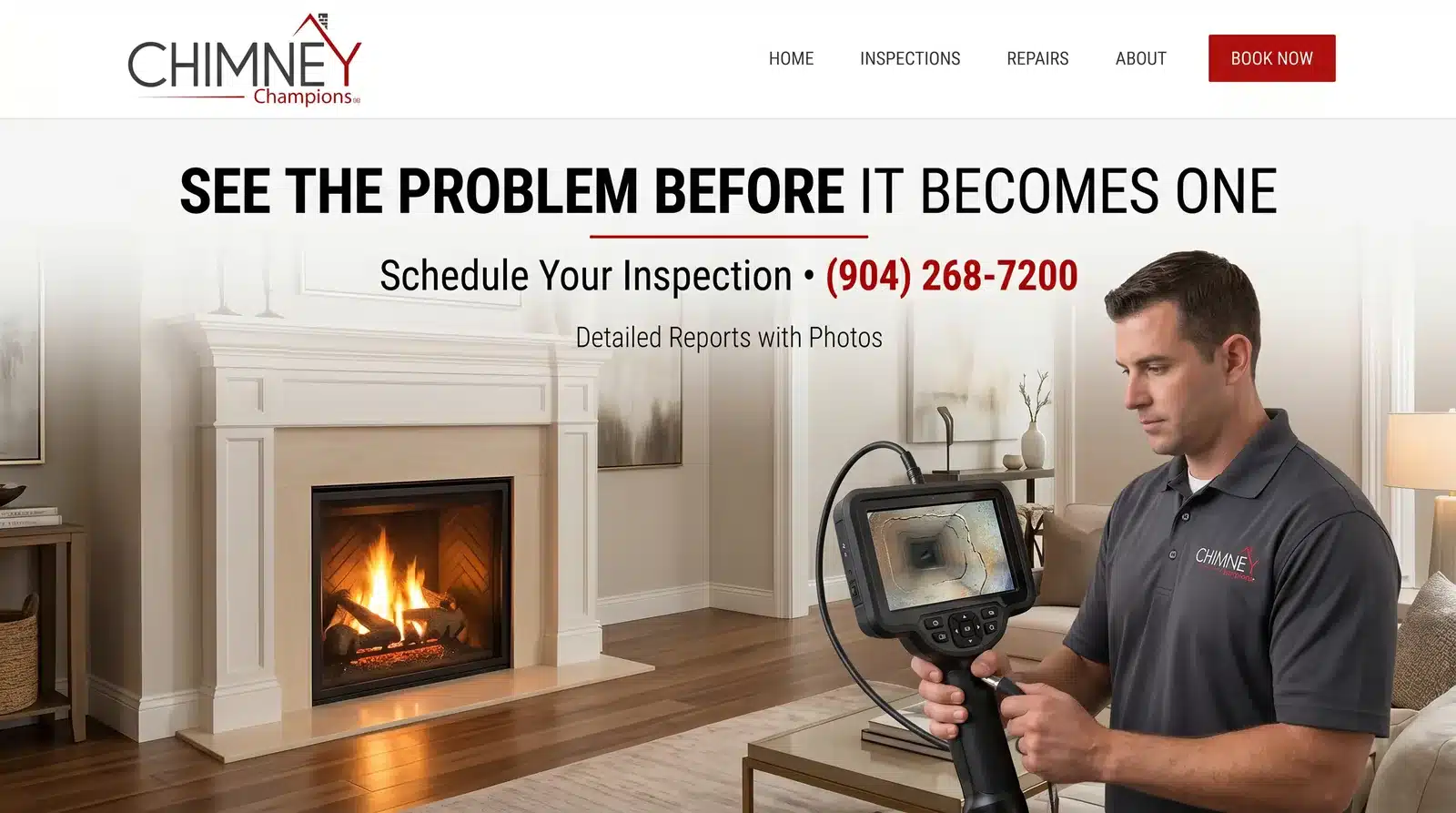
Video inspection technology reveals interior flue damage invisible from roofline or firebox access, capturing high-resolution images of cracks, obstructions, and creosote thickness for documentation.[6]
How Often Should Coastal Homes Schedule Chimney Inspections?
The CSIA recommends annual inspections for all residential chimneys, but coastal properties benefit from twice-yearly evaluations — spring for post-heating-season assessment and fall before winter use.[2] Amelia Island’s hurricane season adds another variable; post-storm inspections catch wind damage, water intrusion, and debris blockages before the next use.
| Inspection Frequency | Recommended For | Key Focus Areas |
|---|---|---|
| Annually (minimum) | All residential chimneys | General safety, creosote buildup, basic deterioration |
| Twice yearly | Coastal properties, frequent use | Salt damage, humidity effects, wildlife intrusion |
| Post-storm | After hurricanes/tropical storms | Water intrusion, structural shifts, debris blockage |
| Pre-sale | Real estate transactions | Full Level 2 documentation for buyers |
Homeowners who burn wood regularly should inspect after every 50-70 fires, as salt-laden air accelerates creosote formation compared to inland environments.[7]
What Are the Biggest Red Flags in Coastal Chimney Systems?
White staining (efflorescence), rust streaks, and crumbling mortar signal active water infiltration — the leading cause of chimney failure in oceanfront properties. Efflorescence appears as powdery white deposits where salt and minerals leach through masonry as water evaporates, indicating chronic moisture problems.[8]
When Should You Call an Inspector Immediately?
Don’t wait for annual inspections if you notice:
- Visible rust on damper, firebox, or chimney cap
- White staining appearing on exterior bricks
- Mortar joints cracking or turning to powder
- Animal sounds or debris falling into firebox
- Smoke entering the room during fires
- Musty odors from fireplace even when not in use
These symptoms indicate either structural failure, blockages, or ventilation compromise — all immediate safety hazards requiring professional evaluation before the next use.
Ready to protect your coastal investment? Call Chimney Champions at (904) 268-7200 or schedule your certified inspection at https://www.chimneychampions.com/schedule/ to catch problems before they escalate into costly repairs or dangerous failures.
Frequently Asked Questions
How much does a chimney inspection cost in Amelia Island?
Level 1 inspections typically range $150-$250, while comprehensive Level 2 inspections with video scanning run $300-$500. Coastal properties often require Level 2 due to higher deterioration risk and real estate transaction standards. Investment in annual inspections prevents $3,000-$15,000 repair bills from undetected water damage or structural failure.
Can I use my fireplace without an inspection?
Operating an uninspected chimney violates NFPA 211 safety standards and risks carbon monoxide poisoning, chimney fires, or structural collapse. Insurance claims for fire damage may be denied if inspection records don’t demonstrate reasonable maintenance. Schedule inspection before first seasonal use or after any period of disuse exceeding one year.
What’s the difference between Level 1 and Level 2 inspections?
Level 1 inspections cover readily accessible areas for systems with no changes or concerns. Level 2 adds video scanning of internal flue, attic and crawlspace access, and detailed documentation — required for property sales, fuel changes, or after weather events. Amelia Island properties typically need Level 2 due to coastal exposure and storm risk.
Do I need inspection if I never use my fireplace?
Yes. Unused chimneys still deteriorate from weather exposure, wildlife intrusion, and humidity. Amelia Island’s salt air and moisture accelerate corrosion even in sealed systems. Annual inspections catch cap rust, damper failure, and animal nesting before they create ventilation hazards or costly structural damage requiring complete rebuilds.
Don’t let coastal conditions compromise your home’s safety. Schedule your certified chimney inspection with Chimney Champions today at (904) 268-7200 or visit https://www.chimneychampions.com/schedule/ to book online with Northeast Florida’s trusted woman-owned fire safety experts.
Written by Laura Wood — Third-generation certified chimney sweep and owner of Chimney Champions. Updated January 2026.
References
- National Oceanic and Atmospheric Administration. Coastal Climate and Salt Spray Effects on Building Materials. https://www.noaa.gov/
- Chimney Safety Institute of America. Annual Chimney Inspection Standards. https://www.csia.org/
- National Weather Service. Jacksonville Florida Climate Data. https://www.weather.gov/
- U.S. Fish and Wildlife Service. Migratory Bird Nesting in Residential Structures. https://www.fws.gov/
- National Fire Protection Association. NFPA 211: Standard for Chimneys, Fireplaces, Vents, and Solid Fuel-Burning Appliances. https://www.nfpa.org/
- Chimney Safety Institute of America. Video Inspection Technology Standards. https://www.csia.org/
- National Fire Protection Association. Creosote Formation and Removal Guidelines. https://www.nfpa.org/
- Brick Industry Association. Efflorescence: Causes and Prevention in Masonry. https://www.gobrick.com/